
– Advancing digital governance, regulatory reform, and investor engagement
– 14.4% increase in companies benefiting from exemptions and incentives, reaching 628 firms
– 70 new entities registered in development zones with investments nearing JOD 195 million
– Higher occupancy rates recorded across industrial and development zones
– 100 new investment opportunities developed to attract high-value investments
– Jordan-EU Investment Conference 2026 to strengthen partnerships and promote investment
– Jordan’s investment indicators recorded notable growth in 2025, reflecting rising investor confidence and the continued attractiveness of the Kingdom’s investment environment
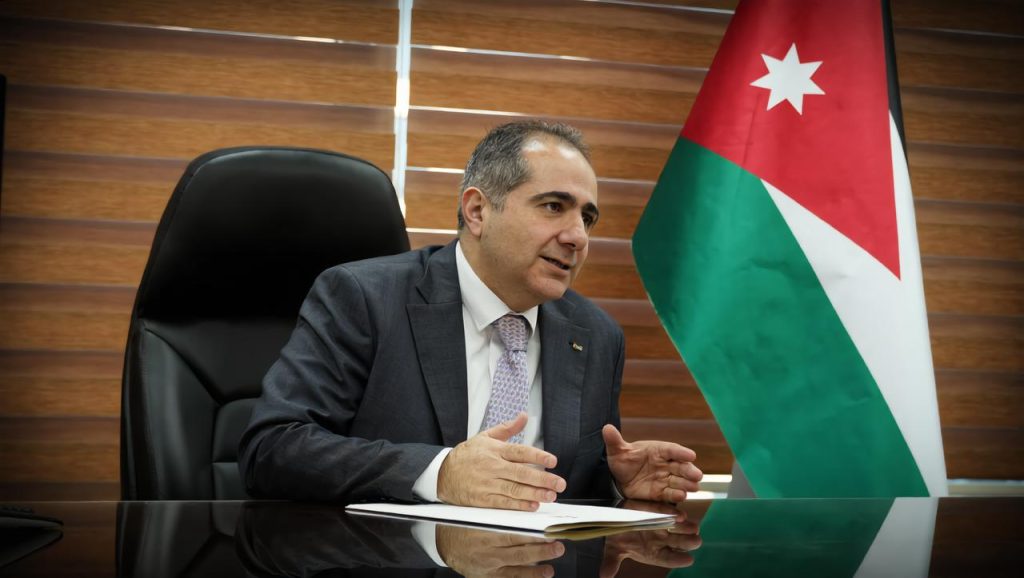
Minister of Investment Dr. Tareq Abu Ghazaleh said in an interview with Al-Rai newspaper that the Ministry is continuing its work under a national vision guided by His Majesty King Abdullah II Ibn Al Hussein, positioning investment as a cornerstone of Jordan’s economic modernization and sustainable development.
He explained that the Ministry continues to implement the government’s executive program aimed at strengthening investment attraction, enhancing the competitiveness of the business environment, and increasing investor confidence through measures that streamline procedures, accelerate investment flows, and support sustainable economic growth.
Abu Ghazaleh said the Ministry has adopted a new integrated approach focused on strengthening governance, updating legislative and regulatory frameworks, expanding investment opportunity pipelines, and enhancing communication with investors while incorporating their feedback.
He added that improved accountability mechanisms across various departments have also been introduced to elevate service quality for both investors and citizens.
“Investment represents a relationship of mutual trust between the government, citizens, and investors,” Abu Ghazaleh said, noting that this trust is built on transparency, partnership, and a shared commitment to sustainable economic development.
In 2025, the number of companies benefiting from incentives under the Investment Environment Law reached 628 companies, marking a 14.4% increase compared with 2024. Companies with foreign partners benefiting from exemptions totaled 75 firms, representing an 8.7% annual increase.
Abu Ghazaleh noted that this growth reflects the continued attractiveness of Jordan’s investment climate and the effectiveness of the incentives provided to stimulate economic activity.
A total of 70 new establishments were registered in industrial cities and development zones, with investments amounting to approximately JOD 195 million and an estimated 4,036 job opportunities expected across industrial and service sectors.
Occupancy rates in development zones also improved in 2025. Tafileh Industrial City recorded a doubling of its occupancy rate to 21%, while the King Hussein bin Talal Development Area in Mafraq increased by 41%, and Salt Industrial City saw an 18% rise.
Abu Ghazaleh said these figures demonstrate growing investor interest in opportunities across Jordan’s governorates and highlight the role of development zones in providing a competitive and integrated investment environment.
He added that four new projects were registered in the National Registry of Government Investments during 2025, bringing the total number of strategic projects to eight, while two strategic tenders in the transport sector were launched for the first time under the Public-Private Partnership (PPP) framework.
Among the key projects currently under development is a major initiative aimed at reducing water loss in southern and southeastern Amman. The project seeks to lower water loss to around 25% by 2040 through the modernization of distribution networks and the deployment of smart leak detection technologies, thereby improving water resource management.
The Ministry is also advancing strategic projects in transport, logistics, and infrastructure, including the Amman Bridge project, designed to reduce traffic congestion in the capital, as well as a PPP initiative to build 41 modern public schools in phases to meet growing educational demand.
Abu Ghazaleh noted that such projects present promising investment opportunities while contributing to improved public services and supporting economic growth.
The Ministry has also developed a national portfolio of around 100 investment opportunities across priority sectors and governorates, which are being promoted through digital platforms and international investment events to attract high-value investments.
Digital transformation has been a central pillar of the Ministry’s work in 2025, including the launch of the “Invest in Jordan” (Invest.jo) platform, which provides a comprehensive digital gateway for investors, offering information on investment opportunities, incentives, procedures, and Jordan’s competitive advantages.
Abu Ghazaleh also highlighted strong economic indicators in 2025, including a 38.1% increase in the Amman Stock Exchange’s market capitalization by February, a 27.7% rise in foreign direct investment inflows during the first three quarters of the year, and foreign reserves at the Central Bank reaching $28.2 billion, reflecting strengthened investor confidence.
Looking ahead, Abu Ghazaleh said the upcoming Jordan-EU Investment Conference 2026 will serve as a key platform to strengthen economic ties with the European Union and showcase Jordan as a leading and secure investment destination in the region.
He reaffirmed the Ministry’s commitment to advancing investment, enhancing competitiveness, and expanding strategic partnerships, despite regional challenges, in order to further consolidate Jordan’s position as a stable and trusted investment hub in the region.